Innoson Vehicles: HYBRID AUTO EXPONENT..
In 2023, when the MONEYREPORT Magazine team visited Innoson Vehicles Manufacturing Company without prior information in an effort to see the marvels governments and the private sector interests have been saying about the very young indigenous auto firm, we wrote after that, “new innovations could be on the way even as indications that gas powered vehicles are rearing to go, ideas not yet thought of in the global automobile industry, would begin to manifest soon if government’s incentives and opportunities will incubate the industry to create more space for his egregious cerebral powers”. Two years after, our findings could no longer be defined as egregious or marvelling, but exponential; both in innovation, quality and quantity of brands. He has added a hybrid car brand to his already flourishing CNG master piece, reveals NIK OGBULIE;
Africans are no longer playing catch-up when it comes to technological innovations. In spite of the absence of some refined materials like iron and steel, uranium, lithium, aluminium it has moved on with the necessary importations which are now used in producing indigenous products like motor vehicles and cars. These have been made possible by the acquisition of the ways and means of coming up of such materials that can effectively compete with evolutions from global institutions within the developed economies and the emerging markets. Few years ago, the auto market was talking of stand-alone CNG vehicles and Nigeria was only admiring the technological marvel from a very long distance, until Innoson Vehicles Manufacturing Company thought deep into its arsenal and stormed Nigerians with an expression that indicated his ingenious indigenous approach to the production which created a new lease of life that offered a challenge to the importation by merchants who were shocked when better quality products were produced in commercial quantity, forcing Nigerian government to come up with a CNG policy and later created an office for its enhancement that was attached to the office of the president. The innoson brand of CNG, described across Africa as magnificent, took over the market against those ones important by Nigerians and government agents who made supplies from across the developing economies.
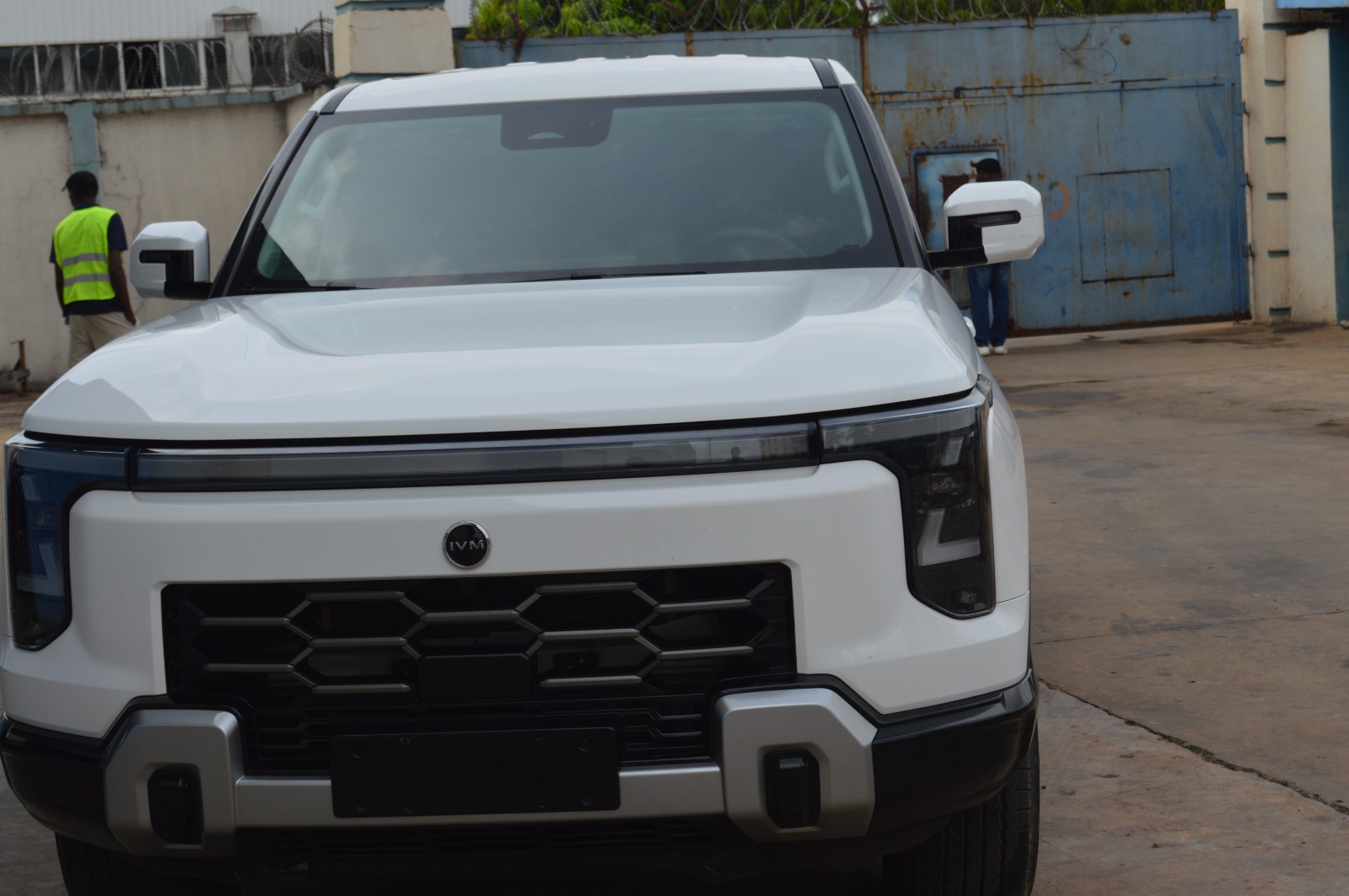
Today, Innoson’s new innovations are not just about CNG, it now has electric vehicles as well and has extended its productions by designing hybrid cars which go with either of the options. The electric car brands can now go with CNG facilities so that users can enjoy the benefit of CNG and electric facility so as to enjoy the advantage of adapting to the one that has the benefit of any of the chosen facilities wherever it applies. By the time the official commissioning of the massive plant which stands on about 400,000 square meters was done in the next four months, Nigerians will enjoy the luxury of buying hybrid cars from close-by and more African patronage will come handy, More Africans will now ask for cars that have any of these facilities and receive them as soon as they want them.
More of these innovations would easily have come the way of many investors like Innoson Vehicles if there has not been the looming paucity of capital over the years. As a matter of fact, the Chairman of Africa’s premium vehicle manufacturing company, Innocent Chukwuma, craves for African capital that will work for African investors which understand the peculiar nature of the issues of debt over-hang and how they have been used to weaponize African industrial progress. He noted the various debt crises that riddle innovation and growth in the entire African economy, to the extent that an African industry begins to die immediately it gets itself entangled with a loan or funding transaction that would ordinarily look so simple. He noted that various reforms within the African economy and banking sector specially, has not been able to solve the issue of funding for African development, rather they have become the very serious conduit that stifled the much desired African economic integration.
The vehicles manufacturing exponent indicated that Bank of Industry (BOI) established by the Nigerian government has been the only one in Nigeria that has religiously offered relevant assistance to manufacturers in Nigeria with the intention of expanding development within the manufacturing realm with the indication that various kinds and levels of manufacturers, especially the ones in heavy industries like vehicles could gain some tremendous leverage over time. He noted that BOI happens to have been the only such supporter the Nigerian economy can boast of presently. His narrative on the much talked about paucity of funds does not differ from what many other manufactures are experiencing, adding that African banks run a company out of the market immediately the company starts making profit, He corroborated the industry-wide narrative that most lending banks in Africa offer loans to manufacturers in African local currencies only to turn round to ask for repayment in foreign currency. He said that this has become so difficult to handle considering the cost of foreign capital to African manufacturers.
With the biggest plastic manufacturing company in West Africa, the various vehicle brands enjoy a wide range of various local components in all the products, making it possible to produce at the costs that make the products affordable to African countries and equally attractive to other users outside Africa. All the vehicle designed are constructed in Nigeria. Only the vehicle engines are imported on special partnership with to manufacturers across the globe who also produce for many other car manufacturers like Innoson across the developed economies, and most notably, the emerging markets. Having gradually reduced the expatriate level of the engineers in his company, it must be understood that the critical and strategic components of the auto designs and production are in the hands of Nigerians who can be said to have imbibed the new technology from the foreign partners who mentored the Nigerian technicians and engineers over a long time. The development of the company has further explained the much talked about technology transfer which African development narrative had believed was a fluke.
Built on an additional factory extension of about 400,000 square meters, the CNG and Electric motor plants are running on virgin production estates, away from the factories for the various car and accessories brands that have become the common features within the sprawling Nnewi and Enugu cities. These give a visitor an idea of the many thousands of employees that have continued to be sustained by the companies and who cannot easily be let off based on the irretrievable technical proficiencies that have either been imported for them or have been sponsored overseas. The factory has the capacity to produce about 200 CNG cylinders every month and can do even more based on demand.
Mr Chukwuma noted that he has been doing well because of the determination to lead Africa and the fact that the administration of President Ahmed Bola Tinubu has been supportive . “Tinubu administration likes manufacturing and it is giving manufacturers some good level of support, especially on commercial patronage and infrastructural availability.”
Over the years, efforts by African entrepreneurs to come up with indigenous vehicles that can fly Africa’s flag to her markets have been quite illusive, even as many rich and well exposed big business names had reverberated African spaces. The expectation that indigenous car companies with over 80% local content would be possible abound, but nothing happened as African countries continued to be mere sales points and assembling spots for many brands. This activity which was very unfavourable to the growth of the African economy had remained largely patronized by top African big businessmen who could not summon courage to initiate the move for a sustainable technology transfer. The development has become very uninspiring as Africa became one of the largest car markets in the world for products whose value-chain is negative due to the fact that all the vehicle components have been manufactured overseas and packed in cartons for the African destination. The very astonishing development about the dumping of foreign vehicles in Africa is that it was a complete discouragement to skills acquisition, it does not encourage the use of locally designed materials like steel, cables and wire, plastics and rubbers as well as glasses and rubber, all of which are cheaply produced in Nigeria. Added to this, the absence of these services has rendered African economy uninvolved in the huge employment that would have been created by other companies that could be suppliers to the vehicle firm. The fact remains that the foreign vehicle firms in African quietly ate their cakes and had them; they owned the firms, they brought the skills, they brought their finished products and they brought their men to fix them. Our men only bought them, apparently they had no choice.
The poor value-creation from the booming car business must have spurred this young Nigerian businessman, who began to think out of the box from his flourishing automobile accessories sales venture. His courage to create a whirlwind in the vehicles manufacturing trade has not only impressed many in Africa, especially the West African region, but has generated strong debates on what to do with his ingenuity which could be a huge new industrial discovery for Africa. Growing sequentially, from small cars to big ones, complicated models, to new technology applications and now to CNG, the time has really come for an explosion of this artistry into many African markets. This becomes very necessary based on the cost efficiency it guarantees all African countries and the advantage of its design for the temperate and tropical environments.
A visit to the production plant located in Nnewi, Nigeria’s ‘Motor Town’ in the South East Nigeria reveals the hidden industrial complex from where so many vehicle brands and accessories factories are made. In all these, only the vehicle engines, gear boxes are imported from some of the biggest vehicle manufacturing companies in the world. Apart from the engine components all the many other components are produced in Nigeria, as specially designed engineering structures. The expansive industrial outlay is a town on its own which the owner, Innocent Chukwuma, said is still work-in-progress as new dreams for car development come into his brain in seconds and are being translated into life frequently. This must have been influenced by the fact that many vehicle types are needed on daily basis for use, a lot of which have remained largely unaffordable by many countries or governments in Africa. For instance the costs of Fire fighting vehicles, refuse disposal trucks, luxury transport buses, mini buses, cars of all kinds, long non-body vehicles and the rest cost so much. In his plant provisions abound for the production of all types en mass and on request.
With the global economic downturn, especially as it affects African countries, Chukwuma believes that Innoson Vehicles can be of great advantage to the various users of his products because the very cheap cost of hauling the vehicle across Africa has already become of huge advantage to the users. With a recent quality approval guaranteed by the Standards Organisation of Nigeria (SON), the company has been awarded value approvals that explain their levels of compatibility with all other imported cars in Nigeria. The company is still unwrapping the new ideas that would further intensify the marvel of its new technology with a new expansion that is now going on in a newly acquired 400,000 square meters land-space near its existing plant. The manufacturing plants space will occupy some 60,000 square meters with a good space for other activities that will have to do with processing for the rapidly expanding company. This new development will obviously affect the population of his workforce which is now a record 7300 workers made up of engineering and other skilled workers. As a matter of fact, the CEO is the number one staff of the company and drives the entire process by mentoring the key staff as he remains at the center-stage of most of the developments in the company.
His success story in his chosen industry cannot be imagined considering his effortless analysis of the state of the Nigerian economy and how it can be made better. His postulations on the Nigerian economy remain very logical when considered along the lines of the current state of the Nigerian economy and the entire Africa at large. He is of the opinion that foreign exchange in Nigeria can only be conserved through the encouragement of local manufacturing where the produce can also be exported to earn more forex from activities that have a very high local content. He also noted that it is only the use of local raw materials in production on some heavy engineering needs that the very high costs associated with so many products in Nigeria can be reduced drastically. To him, business growth is more about focus and innovation. He also feels that manufacturers should be targeting Africa-for-Africa as a sustainable drive that can promote proper economic integration; like having a hub for shipping and linking the major hinterlands with train for proper distribution of products exported intra-Africa. He noted that what happens now is that when you ship a product from Nigeria to South Africa, the goods must first go to Europe before getting to South Africa, which means that apart from the long time that will be involved, the cost will still be very high because of the merry-go-round involved.
Many refer to him as the man who saw tomorrow because he muted the idea of gas vehicles to the Nigerian government when nobody was thinking about it and has in the real case started producing and selling them before now. According to him, the demand for CNG is now so high and he is piloting more demands from various users. The ‘secret’ behind the speed at which Innoson Vehicle Manufacturing Company (IVM), Nnewi beat other brands to line up hundreds of locally manufactured compressed natural gas {CNG} buses for delivery to customers following the removal of fuel subsidy on May 29, has been revealed by the Chairman of Innoson Group. Chief Innocent Chukwuma said in an interview at his auto plant in Nnewi on Tuesday, that long before the electioneering campaign (during which most of the Presidential candidates vowed to end subsidy) and even before the declaration by the President that subsidy had gone, he had known that high pump price of petrol and diesel would shift demand to vehicles running on natural gas.
Chwkwuma disclosed that he benefitted from his own foresight, “My vehicle manufacturing factory is about 12 to 13 years today. I diversified into producing CNG vehicles two years ago when I knew that someday soon, fuel price would go up. I knew right from the beginning that government must remove subsidy which would eventually increase the pump price of fuel.
“I started planning by buying the equipment. That was why I was able to produce so many units immediately the fuel subsidy was removed by the government. If you go to places like Benin City, 80 per cent of the vehicles they are using is CNG- powered. They have tested CNG and it’s working very fine for them over there. So, I believe in the nearest future, all Nigerians will embrace CNG vehicles, because they are not just very affordable, but using them also leads to low maintenance costs. “That was why I started the production in time, in fact, before everybody, and we are doing well. Now, we are converting petrol/diesel vehicles for people that are using our own (Innoson) vehicles. After some time, when our own vehicles have been covered, we can then start converting vehicles for other people,” he said.
He said he was sure the withdrawal of subsidy was going to raise the pump price of petrol so high that everybody would switch to CNG, which according to him, is cheaper and environmentally friendly. “That was my own thinking before I started to develop CNG. I knew it was the way forward, and that government must eventually remove the subsidy on fuel. Today, they have done it. It was a big surprise to many that I started manufacturing the alternative CNG buses and cars even before the subsidy was removed. But, there is nothing there. It was just that I had the foresight to calculate what the fuel price would be in future; believing that when the pump price goes too high up, the alternative would be CNG vehicles.
So, I went straight and started producing CNG vehicles. Now, I make vehicles that can use CNG and petrol or diesel. In some places, CNG is not available. In such situations, the alternative can be serving them. When CNG is available everywhere, I will make all the engines to be CNG-powered only. Now we are doing engines that can be CNG, fuel or diesel-powered. The price is also very cheap,” Chukwuma noted.
The difference between CNG and the other sources of fuel is very clear and far apart. So, today, following subsidy withdrawal, people no longer fuel their vehicles as they used to because of the harsh economic condition in the country. That is why I believe that if government gives some kind of incentive to companies like Innoson, we can build CNG conversion centres everywhere in Nigeria, so that everybody can embrace CNG and enjoy the huge benefits. Many Nigerians are using my vehicles. We have a lot of our CNG vehicles in Edo state and other places, and they are happy with their performance. I am encouraged. People are giving us a lot of support. Many people are no longer ready to buy imported vehicles anymore, except Innoson vehicles. They believe that if they continue to buy Innoson vehicles, the company will employ more Nigerians and people will be more secured in their jobs. Even though ours are not perfect, they prefer using it with the anticipation that after sometime, what is good will even be better. I believe our own is still good enough. ..”, he emphasized.
Dr. Chukwuma reacted to the specific mention of 20-seater CNG buses in the broadcast by the President saying, “any size of bus that Nigeria wants, we have the capacity to produce them here in Nnewi. We have the capacity to produce 120-seater, 20-seater or 10-seater bus models. The important thing is to give them what they want. We produce bus variants from 7-seater to 60-seater, (the latter with provisions for standing passengers). So, it all depends on what you want. We also produce cars, SUVs, and MPVs powered by CNG.” Dr. Chukwuma also spoke on the high cost of converting vehicles from consuming petrol or diesel to CNG: “Conversion is very high now and before the cost will come down government has to come. Before the cost will come down, there is need for an investment which requires government support. With such investment, the cost of conversion to CNG can be reduced to N300, 000
.
Africa’s modern economic history. Over the past decade, Innoson has evolved from a symbolic indigenous manufacturer into a significant, though still developing, industrial player within Nigeria and parts of West Africa. Its trajectory reflects both the possibilities and the structural constraints of industrialisation in Africa.
To understand its impact, it is important to consider its origins. The company grew out of a broader entrepreneurial ecosystem established by its founder, who had already built successful ventures in motorcycle assembly and plastics manufacturing. This vertically integrated foundation enabled the transition into automobile production. The first Innoson vehicles were rolled out around 2009, marking a milestone in Nigeria’s efforts to establish indigenous automotive manufacturing.
At that time, the Nigerian market was dominated by imports, with tens of thousands of vehicles entering the country annually. Innoson entered a space characterised by weak local industry and strong consumer preference for foreign brands. By the mid-2010s, it had established itself as a pioneer, producing thousands of vehicles and developing a manufacturing facility with an annual capacity of about 10,000 units. Its importance, however, remained more symbolic than structural, serving primarily as proof that local production was possible.
From around 2015 to 2025, the company’s growth has been gradual but steady. It expanded its product range to include saloon cars, sport utility vehicles, buses and commercial vehicles, targeting both private and institutional buyers. A key feature of this period has been its emphasis on local content. The company maintains that a significant proportion of its components are produced within Nigeria, with the remainder sourced internationally. This hybrid model reflects a pragmatic approach to manufacturing, balancing ambition with economic realities.
Employment generation has been central to its development. By the early 2020s, Innoson employed thousands of workers across various roles, from assembly line operations to engineering and administration. Beyond direct employment, its activities have supported a wider network of suppliers and service providers, contributing to a broader industrial ecosystem.
Government patronage has played an important role in sustaining demand. Federal and state institutions have increasingly adopted Innoson vehicles for official use, providing a stable market in an environment still dominated by imports. At the same time, reliance on public sector demand has exposed certain limitations. Growth among private consumers has been slower, influenced by concerns around quality, resale value and brand perception. As a result, the company has yet to achieve widespread dominance in the mass market.
In recent years, Innoson has shown an awareness of evolving technological and market trends. Its move into the production of tricycles reflects an understanding of Nigeria’s transport realities, where informal systems play a significant role. More notably, the unveiling of a locally made electric vehicle signals an intention to align with global developments and move towards more advanced manufacturing capabilities.
Within Nigeria, the company’s broader impact has been considerable. It has contributed to shifting the country from a purely consumption driven economy towards one with growing productive capacity. By establishing operations in Nnewi, it has reinforced the city’s status as an emerging industrial hub. Its focus on localisation has stimulated ancillary industries, encouraging the growth of suppliers, fabricators and related services.
The company has also contributed to skills development. Workers have been trained in areas such as welding, painting, assembly and quality control, helping to build a pool of technical expertise. This has wider implications for the manufacturing sector, as knowledge and experience gained within Innoson can diffuse into other industries.
Its influence extends into public policy. Innoson has become closely associated with government efforts to revive the automotive sector through supportive measures, including restrictions on fully built vehicle imports and incentives for local assembly. The company often serves as a practical example used to justify such policies.
Symbolically, its presence has had a strong cultural impact. For many Nigerians, Innoson represents a break from the long-standing belief that complex manufacturing is beyond the country’s capabilities. It has helped to inspire confidence and encourage a shift in entrepreneurial ambition towards production rather than purely trading or services.
Beyond Nigeria, Innoson’s influence across Africa, though still developing, is meaningful. It contributes to reshaping perceptions of the continent’s industrial potential by demonstrating that value-added manufacturing can take place locally. This is particularly significant in a context where many economies have historically relied on exporting raw materials and importing finished goods.
The company’s activities align with the objectives of the African Continental Free Trade Area, which seeks to promote intra-African trade. Although exports remain modest, the movement of vehicles produced in Nigeria to other African markets supports the development of regional value chains and reduces reliance on imports from outside the continent. There are also potential spill over effects. As Innoson’s supplier network grows, some firms may expand beyond Nigeria, contributing to a more interconnected manufacturing ecosystem. This could, over time, support the emergence of regional industrial clusters in automotive production and related sectors.
A notable aspect of its strategy has been its emphasis on backward integration. By promoting local production of inputs, the company contributes to reducing dependence on imports and supports domestic industries. This aligns with broader goals of economic self-reliance and sustainable development.
Ultimately, the significance of Innoson lies not only in its output but in the precedent it sets. It has shown that large-scale manufacturing is achievable within Africa, offering a model that can be adapted in other sectors and countries.
Over the past decade Innoson Vehicle Manufacturing has made substantial contributions to Africa’s industrial landscape and has begun to influence broader African economic thinking. Through local production, employment generation, skills development and regional engagement, it has helped to reshape perceptions of what is possible. While challenges remain, its impact is clear. Innoson has not only produced vehicles but has also strengthened confidence in Africa’s capacity for industrialisation, laying a foundation for future progress and innovations.