From IKENNA EMEWU
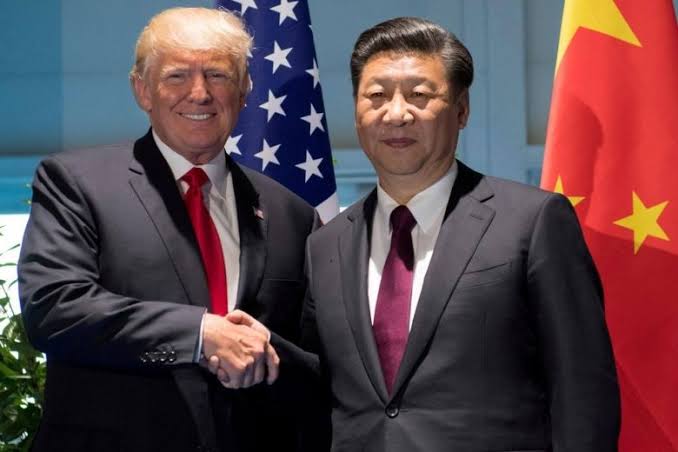
Later this week, specifically on July 9-11, President Donald Trump of the USA will host a mini-summit for five African countries in Washington. The White House announced that the parley will be on trade between the countries. However, that trade anchor is a red flag to many who don’t make sense of the trade banner.
Much as countries are free to mingle, certain issues around the meeting, especially the choice of the countries, raise questions on the relevance and the possible intention of the US. It is dubbed a discussion for trade, and that elicits more doubts because Trump, whose economic policies target big deals with the major players, would not convince many why the five tiniest economies of Africa became his fishing waters.
Liberia, Senegal, Mauritania, Guinea-Bissau, and Gabon are not known allies of the US, if at all; any African country is actually one. Even with Liberia gaining Independence from the US, they don’t have any closeness between them.
However, the population of these five countries, which is 33.45 million, is less than Ghana’s 33.79 million people. The collective GDP of the five was USD67.17 billion in 2023, whereas Ghana at the same year had a GDP of USD76.7 billion. Apart from sovereignty voting rights at the global stage, trade-wise, as Trump anchors the topic, Ghana is a much larger entity to relate with than these five. But US didn’t do that.
Never about trade
The trade volume between the US and the entire ECOWAS, which comprises four of the five members, was just a paltry $6.7 billion in 2022. These four among the ECOWAS being the least economies can’t have more than 10% of the volume, an equivalent of USD600 million. However, ECOWAS trade with the US was in favour of the African region, with the US running a deficit of USD2.7 billion. Maybe, getting the disguised consent in the long run would facilitate turning the deficit into surplus for the US. But it is never trade. The trade volume is not enough economic incentive to move the US into this action. The target is most likely to secure the coercion to militarize.
Capturing African waters for militarization
Between when the meeting will be held and when the US brokered peace between Congo DR and Rwanda is a week. The reason for the US interest in that peace deal is business and economic. In the DRC, there are a good number of US mining private companies. They intervened for peace between DRC and Rwanda to safeguard their interest, which led the US to build the Lobito Corridor connecting Zambia, DRC, and the Lobito Port of Angola. The 1,300km railway track is built simply to mine and evacuate critical minerals from this region to the US. As a US-backed project through substantial financial and political support, the US enjoys unfettered access to the Atlantic Ocean shores of Angola, where the port is, Congo, and the Congo DR. In that axis of the waters,between Gabon, Congo Brazzaville, DRC, and Angola, there is a 1,045km of the seashore. That is what the US targets in bringing Gabon to the so-called trade talks in Washington, because adding Gabon to its other allies would afford the US the long-targeted opportunity to militarize the Atlantic Ocean shores of Africa.
At the Gulf of Guinea flank, the deal with Mauritania, Senegal, Guinea Bissau, and Liberia also affords the US another 1,137 nautical miles of the Ocean shores of West Africa. The US gaining untrammelled access patrolling 2,182 nautical miles of the Atlantic shores of Africa is already halfway into the complete militarization of that axis of the world waterways, a yearning it has pursued since the year 2000. The refusal of President Goodluck Jonathan of Nigeria to allow Barack Obama to militarize the Gulf of Guinea was one of the offences he caused the US for which they aligned and pushed him out of power in 2015.
Barricading Africa’s Atlantic
Geographically, these five tiny states are littoral states of the Atlantic Ocean to their south, and by implication, US living at the western shores of the Ocean has only the high seas in between them, after their Exclusive Economic Zones (EEZ), Contiguous Zones, Territorial Waters all of a maximum of 200 nautical miles
It is more of the politics of militarizing the Gulf of Guinea, which the bigger countries in the region, such as Nigeria, Ghana, have resisted and refused over time; the US is out to actualise now.
U. S. Marine Corps General Michael Langley, Commander of U.S. Africa Command, visited Senegal in February 2023. This development is unfolding the true intention. They want that stranglehold on this flank of Africa, especially after they and NATO allies lost their vice grip of the military and economic benefits of the Sahel African region, a charge France led.
The African Lion 2025 exercise ended recently on the Atlantic Ocean and was championed by the US, 7 NATO allies, and 42 other countries. Senegal was a target and participant.
Among these five invited countries for the claimed trade talks, only Gabon wasn’t a participant in the 2025 African Lion military exercise. The target is getting clearer.
A quarter of a century’s quest by the US to militarize the Gulf of Guinea, and intensified since 2005, is becoming a reality. This is the next scramble and partition of Africa unilaterally by the US. The target is military domination, the oil that is like a common denominator among all the countries of the region, and what it says is its maritime interest.
If the US succeeds in militarizing this sea way, it will definitely frustrate the free use of the navigation route by other countries. It will also put so much military pressure on other African countries on these shores, including Nigeria, Ghana, South Africa, etc. That may even lead to the collapse of their peace and growth.
With all these in mind, we also sought the opinions of some experts on the issue who spoke frankly.
World Bank expert and publisher of Money Report Magazine Nik Ogbulie believes that the Trump administration is confronted by two major global challenges, which are so entrenched with the potential to whittle down the global influence of the USA.
In the first place, the indication that the Trump administration is playing catch-up with China, especially in Africa, is believed to have informed most of the activities it has chosen to give attention to. Because the threat to the economy and politics from China is real, Trump has been trying to shut down Chinese access to many countries, irrespective of their size and relevance.
On the other hand, the emerging diplomatic escapade from Trump on African mushroom economies is not limited to China’s emerging global threat, but an effort to prepare for other new sources of raw materials other than their traditional Middle East sources.
While Mr. Ogbulie consider the search for mineral source replacement achievable and timely, but he believes that’s intention to block the Chinese inroad into Africa as an ambitious and blind alley is because there are strong indications that China has really entered the heart of Africa and is progressing. This may be why US has ignored countries that have a visible and impactful relationship with China to settle for the smaller ones.
The Vice President of Sweden Belt and Road Institute Hussein Askary pointed out that this is a typical Trump show business. No substance at all. It is easier to bribe small countries, like the microstates in the Atlantic, to support American military adventures and voting in the UN General Assembly. The U.S. is bankrupt financially and physically. Therefore, they chose these small states that don’t cost much money. But they can make a lot of trouble.
Journalist Josfyn Uba believes that, On the face value, trade talks are usually wrapped up to boost trade and economic cooperation among the participating nations. However, given the strength of diplomatic ties existing between China and Africa, he believes that Trump’s move as a desperate attempt for an asymmetric response to China’s new trade initiative, resulting in a major policy shift aimed at reshaping their trade relations with the extension of zero-tariff treatment to all African countries maintaining diplomatic ties with Beijing.
Besides that, the US may also think that China’s openness to the outside world with the BRI initiatives poses a threat to her, and may be tactfully annexing the economic strongholds of these smaller African nations through the “invitation to the table of men” and that they may also be easier to negotiate favorable terms without the complexities that larger economies might bring.
Beyond the surface, Trump’s proposed trade talks with these countries in focus appear to be an intentional effort to promptly strike a “Balance of Power” in Sub-Saharan Africa, using these countries as a podium. Africa and parts of Asia have always been a squabble ground for the world powers.
According to Publisher of the Lagos Niche Newspaper Ikechukwu Amaechi, Trump’s curious invitation to the leaders of Gabon, Guinea-Bissau, Liberia, Mauritania, and Senegal to Washington this week is raising some eyebrows because the countries are not Africa’s first 11 economically, politically or even socially.
Granted, the White House explained last week that Trump believes African countries offer incredible commercial opportunities that benefit both the American people and African partners. However, some people believe that the invitation may have to do with migration and drugs, issues core to Trump’s agenda.
“These five countries lie directly on refugee and migrant paths that have, over the years, sent tens of thousands of people to the US-Mexico border. International drug routes also run through this region.”
In addition, Amaechi also believes that it is Trump’s idea of snubbing the big players like Nigeria and South Africa that are presently in a romance with the global South.
****First published by ASIA PACIFIC DAILY