
One People, United in Culture is the gastronomy story that remains the selling point of the Creative Africa Nexus (CANEX) segment of the IATF2023. It explains the uniqueness of African food tastes. In the programme is built the legendary “Jollof War”, writes Vivian Ihechu.
From time immemorial, food has been integral to man’s existence, spurring good health, economic activities, businesses and ultimately life. As an integral component of the way of life of many peoples and cultures, indices have shown that food system has positive link with economic growth and development because of its dynamism, influenced by diverse trends such as migration, urbanization, population growth, technology, innovation, government policies, and climate change among others.
In recent times, nations, worried about economic growth and development as well as the pace at which essential human and capital resources in nations could translate to an improved living condition for the populace, have made a global target to achieve sustainable food, economic growth and development a desire by all stakeholders. It is so crucial that the United Nations in 2015 included food security as the Sustainable Development Goal 2, with the aim of achieving “zero hunger”, and in realizing this sustainable food security as desired by all stakeholders globally, global transition from the traditional food systems to a sustainable one is needed.
Food security continues to show as one of the critical challenges for the world to face, hence even the World Bank has, therefore, included food and national security as among the eight global challenges to address at scale, mobilizing billions of dollars in resources to tackle issues and protect livelihoods worldwide.In Africa, food is central as it plays diverse and critical roles in homes, economy, trade, social gathering and even in religious ceremonies.Extending beyond the kitchen, African cuisine varies significantly from region to region, with each area having unique dishes and cooking methods.
Over the years, African food cuisine has travelled beyond the continent, playing a significant role in the cultural identity and expression of Africa, diverse and reflecting the continent’s rich history, traditions, and culture. The ingredients, presentations, nutritional benefits and tastes telling big stories about same. The vast and abundance of staple grains including millet, rice, fonio, sorghum, and wheat form the basics of the continent’s gastronomy. Legumes, such as beans, lentils, chickpeas, are central to many dishes, giving essential protein and fiber.
Vegetables and fruits presenting in exciting colors and taste, are often cooked with or served fresh with meals, without negating the spices and peppers from different roots, fibres and stems.From the Americans to Europe, up to the Caribbean and even Asian, African food items and shops have continued to spur with rising demands for the taste of African cuisine, which invariably increases revenue and income.Recognising the communal experience that food serves, which goes beyond geographical boundaries, connecting peoples through shared culinary traditions, the African Export-Import Bank (Afreximbank), for the first time in Africa, at its Intra-African Trade Fair (IATF2023) in Cairo, Nov. 9 to Nov. 15, 2023, introduced the CANEX African Gastronomy and Culinary Arts Programme, a novel addition to its Creative Africa Nexus Initiative (CANEX).
The Intra-African Trade Fair (IATF) was instituted by the African Export-Import Bank (Afreximbank), in collaboration with the African Union Commission (AUC) and the African Continental Free Trade Area (AfCFTA) Secretariat, to provide a unique platform for facilitating trade and investment information exchange in support of increased intra-African trade and investment, especially in the context of implementing the African Continental Free Trade Agreement (AfCFTAIATF brings together continental and global players to showcase and exhibit their goods and services and to explore business and investment opportunities in the continent. It also provides a platform to share trade, investment and market information with stakeholders and allows participants to discuss and identify solutions to the challenges confronting intra-African trade and investment.In addition to African participants, the Trade Fair is also open to businesses and investors from non-African countries interested in doing business in Africa and in supporting the continent’s transformation through industrialisation and export development.
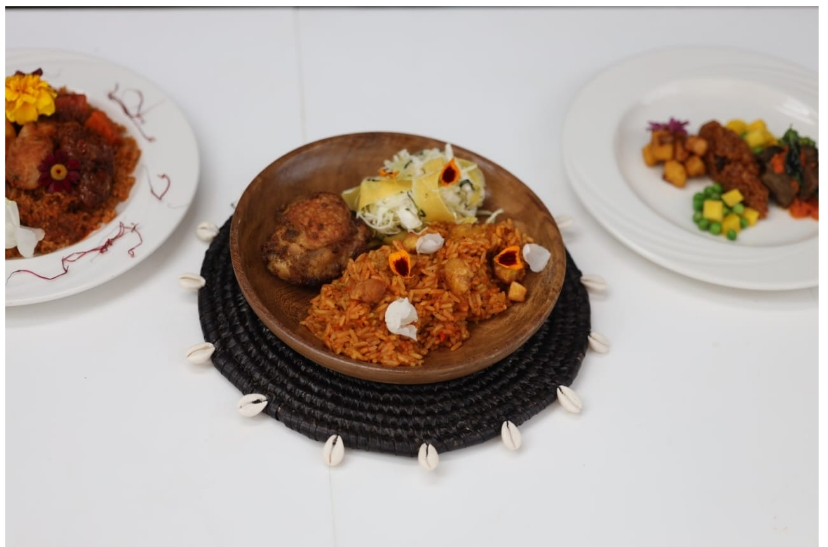
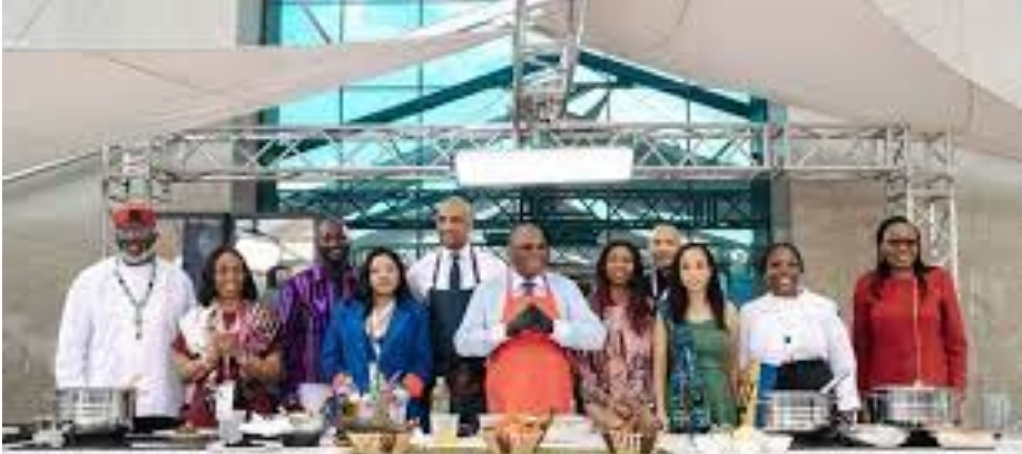
The CANEX African Gastronomy and Culinary Arts Programme, the newest vertical within the CANEX programme, was developed by African Food Changemakers had participating chefs Davisha Burrowes, Development Chef, Yolk Brands, Barbados; Christian Abegan, CEO Abegan & Co, Cameroon; Natasha de Bourg, President, Trinidad Culinary Limited, and Chef Stone of Red Dish Chronicles, Nigeria. The initiative aims to redirect continental efforts towards local food production, ensuring food security and reducing costs, and ensuring stability of the Africa’s food supply chain. The African Gastronomy and Culinary Arts Programme featured an exciting Diaspora Showcase moderated by Ndidi Nwuneli, founder and executive chair of Africa Food Changemakers, Christian Abegan, CEO Abegan & Co, Cameroon; Chef Stone, and Natasha de Bourg, President, Trinidad Culinary Limited, and reality star on the popular Bravo TV Series, “BelowDeck Sailing Yacht’’; Chef Stone of Red Dish Chronicles, Nigeria; and Davisha Burrowes, Development Chef, Yolk Brands, Barbados, participating and giving expert insights into the impact of African cuisine on the global culinary landscape.Jollof Rice at the “Jollof Wars”, African Gastronomy and Culinary Arts Programme , CANEX, IATF2023.
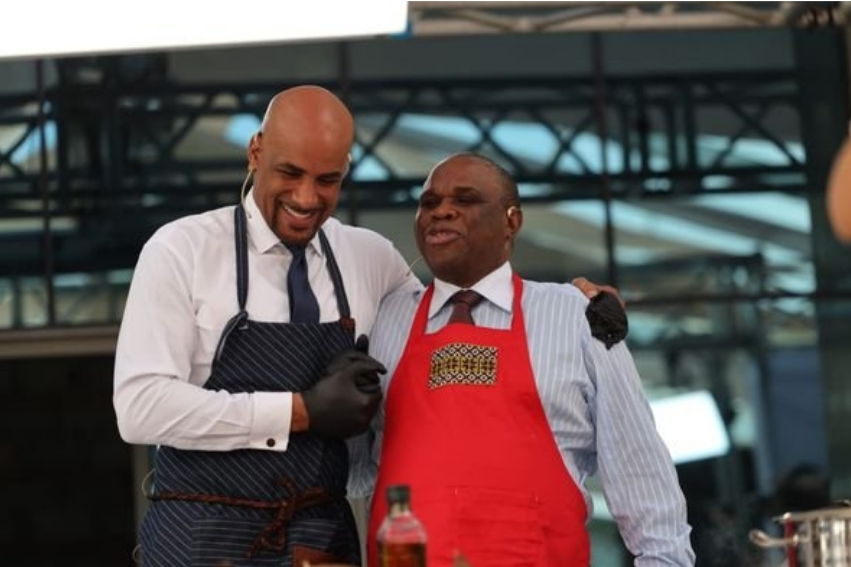
The highlight of the inaugural session was the captivating “Jollof Wars,” a live demonstration showcasing the unique flavours and cultural diversity of Jollof rice, featuring friendly competition among Nigeria, Ghana, and Senegal, where Ghana emerged winner.Professor Benedict Oramah, President of Afreximbank, and renowned actor, Boris Kodjoe, also joined in an exciting cooking session celebrating the rich tastes of African and African diaspora cuisines. It featured nine celebrity chefs from Africa and the Caribbean taking part in masterclasses, live cooking demonstrations and conversations with culinary experts.Commenting, Prof. Benedict Oramah, President and Chairman of the Board of Directors of Afreximbank, said that the introduction of the CANEX African Gastronomy and Culinary Arts Programme would help to refocus continental efforts towards local food production to ensure food security, reduce high food costs and imports and minimise the impact of external shocks on Africa’s food supply chain.Importance of Food – Health, Trade and Economies Dynamics(M) Prof. Benedict Oramah, President and Chairman of the Board of Directors of Afreximbank, at the CANEX African Gastronomy and Culinary Arts ProgrammeOramah emphasised the need to see foods as source of nourishment and binding force that cultivates a sense of community.
He also noted that over the years, food has influenced cultures. According to him, food serves as a communal experience that goes beyond geographical boundaries, connecting peoples through shared culinary traditions. He also said food and religion were intertwined, calling for preservation of food cultures and practices to promote biodiversity.Ndidi Nwuneli, an expert on African agriculture and nutrition, food ecosystems, entrepreneurship, social innovation, and youth development, coordinated and moderated the gastronomy session at CANEX IATF2023. She said that food is health, medicine and life, and of which are critical to dive and sustain job creation and trade.
Nwuneli is also the Founder of LEAP Africa, a non-profit, and also the African Food Changemakers, which provides support for African entrepreneurs to start and scale resilient and sustainable agribusinesses. She is also the co-founder of Sahel Consulting Agriculture and Nutrition Ltd.Commenting on the importance of food and its being celebrated at CANEX IATF2023, she said: “Having a gastronomy session is because we recognise the importance of food. Food is not only life, food is health and medicine.
Food is critical for trade and also for job creation”.Lending his voice, Boris Kodjoe, during a panel conversation focused on tracing the African food journey and its impact on food culture in the Caribbean, the Americas, and globally, said food isn’t just sustenance. It’s a storyteller weaving the intricate threads of our histories and cultures’’.Africa boasts of an amazing array of cuisines that reflect the vastness of its landscape and the diversity of its cultures, with assorted dishes from the “markets of West Africa, highlands of East Africa ,the shores of North Africa, and, the savannas of Southern Africa, each with its own distinct flavors and characteristics’’. From the predominantly use of pepper, spices, soup and stew of the West Africa, dishes to the predominantly varied vegetarian dishes from Eastern Africa. Steadily, African cuisine has considerably influenced the food cultures of other regions of the world, and is still growing in popularity with increasing migration and globalization.
For instance, African flavours and spices have been incorporated into the culinary of many other cultures, with many dishes originating from Africa becoming popular in continents like North America and the Carribeans. Oramah noted that in Africa, food serves as a communal experience that goes beyond geographical boundaries, connecting peoples through shared culinary traditions. He also said food and religion are intertwined, hence calling for preservation of food cultures and practices to promote biodiversity. “Don’t forget, in many of our cultures, food is also part of the religion, so to say. There are certain kinds of food we eat when we do certain kinds of sacrifices, to the gods. I know other religions have come and those things are beginning to change, but because we use the food to celebrate those things, they bring a sense of community. Those who talk diversity, should also promote diversity in the food we eat. This is because if we preserve and develop our own food, we will now preserve the plants that produce them. So, food is just another way for us to tell our story. We should talk about how African food is influencing all of the cultures,’’ he said.
Chef Natasha de Bourg, President, Trinidad Culinary Limited, relished at the “orgasmic’’-like experience from African culinary with diverse spices. “There is a need to enrich our cultures. For me, when I think about African culture, it goes back to the DNA of who we are. For me personally, I prefer African food. It’s just diverse. It has to be passed from generation and there is need to understand this culture fully and for it not to be adulterated. We live in a culture that’s growing and changing with trend, and gastronomy and molecular gastronomy and all these things are also doing same,’’ she said.Buttressing the uniqueness of Africa and its varied cuisine selections, Nwuneli affirmed that Africa is naturally endowed for agricultural excellence. According to her, “this is one industry we can compete in globally. Our food is phenomenal.
We have tremendous diversity. It is nutritious, healthy and the world needs to know about Africa’s food. It needs to be celebrated. If our food is celebrated round the world, it impacts lives, farmers, jobs, it brings foreign direct investment, it brings hard currency back to the continent and it changes the narrative of Africa from being hungry to a successful entrepreneur.”Oramah described the CANEX African Gastronomy and Culinary Arts Programme as an opportunity for the promotion of African cuisine to develop trade and local food value chain through promotion of local foods, highlight their superior health benefits to local and regional communities and support local restauranteurs and entrepreneurs to upgrade the dining experience through skills development and capacity building.He said the programme would improve access to finance to help build sector infrastructure, such as restaurants, franchises and packaged goods production plants, to develop the local food value chains and increase employment opportunities. Continuing, Oramah said that the programme would develop an enabling ecosystem from farm to table and would address issues such as food sustainability, GMOs, local farming, the business of franchising and the art of African cuisine.
According to him, Afreximbank introduced its African Gastronomy Development Framework to finance the development and expansion of food service market infrastructure, support production of local packaged goods and other value-add products and facilitate training and capacity development of African chefs and sous chef, food technologists, nutritionists, food safety specialist, etc.Oramah also noted that beyond being a source of nourishment, “food is a binding force that cultivates a sense of community among people. It serves as a communal experience that transcends geographical boundaries, connecting individuals through shared culinary traditions.
Each dish carries a unique story, reflecting the richness of African culture. By preserving this diversity, Africa can safeguard an essential part of its identity for future generations’’The initiative provides a platform to return to Africa what belongs to Africa, to also preserve our culture, food, cuisine does not only take you to the end of the value chain of agricultural products, but also takes you to the end of the agricultural produce. It means that we have to find a way to increase the way that our food is eaten and the scope of the spread, to attract the highest value of what we produce at home.Nwuneli shared that with cross exchange of culinary recipes and food items, “not only people will get to know more about and accept Africa, revenue and jobs will be created.
We believe at the highest levels, that when we embrace proudly African food, when we are celebrated globally, it raises our profile, increases the demand, and also changes narratives about Africa.’’Among many stories, she cited the success story of Chef Pierre Thiam, a native of Senegal, who sources fonio (Acha), a highly nutritional grain, from African farmers and now has his products all over the shelves in every major supermarket in America, with the grain being used in making chips, beer, salad and others.Chef George Dediho, African Cuisine Expert, Ghanaian, said: “there is a lot of food in Africa that need to be sold to the world. Africa has the best cuisine, so far, I have seen, because we have a lot of food that people don’t know about.
So, this is an opportunity for us to come together and put up the best dishes on the plates for people to try and know the cuisine we have in Africa. So, far, I think this is one of the best events, so far put together in Africa.’’Boris Kodjoe, advocated for a captivating approach to capturing these narratives – a documentary series that delves into the profound impact of food on our stories and cultures.Chef Christian Abégan, expert in gastronomy strategy and food security, born in Cameroon, emphasized the importance of preserving and innovating African culinary heritage.He stressed the need to sustain the essence of African cuisine and rich culinary traditions of Africa in a contemporary perspective.
For Nwuneli, “Africa should maximize the many opportunities and benefits that the geography of the continent offers to boost relations, trade and industry. Africa is naturally endowed for agricultural excellence. So, if we’re naturally endowed for agricultural excellence, why are we not capitalising on it for trade globally and locally?.Chef Stone, Red Dish Chronicles, Nigeria, observed that “a lot still needed to be done but that Africa must not relent in showcasing and exporting its diverse sumptuous cuisine to the world.
Things like these (CANEX African Gastronomy and Culinary Arts Programme) are a start.There is a lot more to be done and the conversation is what to pick up and continue with.We want to export African cuisine to the world. The aim is globalization. We have to globalize what we have, so we can continue to export ingredients, knowledge, culture to the world , and it starts with events like this’’For Oramah, very importantly is the need to resist the imposition of external influences on African culinary choices. He said in the context of global Africa, Africans should not allow our cuisines to be diluted so much by outside influences. This, he said, had diverse outcomes, including health implications. He emphasized the importance of ensuring that African food reflects genuine African tastes, resisting the homogenization that could occur with globalized trends, stressing the need not to allow foreign influences impact on African culinary choices.
“There is need to cherish and champion Africa’s diverse food heritage. Each dish carries a unique story, reflecting the richness of African culture. By preserving this diversity, Africa can safeguard an essential part of its identity for future generations. Those who talk diversity, should also promote diversity in the food we eat. This is because if we preserve and develop our own food, we will now preserve the plants that produce them. If our cuisines are diluted by outside influences, our bodies will reject them.
We start having more non communicable diseases because our bodies, our genes, are not adapted to those kind of foods. Because we are beginning to negate a lot from cultural heritage, many things including the food we eat, that is why today, we are having phenomenal increase in diseases. So, as you promote our cuisines, gastronomy, we are promoting good health for ourselves. As we promote our cuisines, we are helping ourselves take commanding heights of our economy.
If we promote our food, we will be preserving the environment. If we promote our food, we will be increasing the sense of community. If we promote our food, we will increase the confidence we have in ourselves because nobody can come and tell us our food smells one way or the other. In conclusion, infusing the African Gastronomy and Culinary Arts Programme in the bid to make Africa great again helps to develop a supportive farm-to-table ecosystem and addresses issues such as food sustainability, GMOs, local agriculture, the franchise business and the art of African cuisine”, he noted.Indeed with CANEX being the platform to crowd source ideas, the African Gastronomy and Culinary Arts Programme is the springboard to celebrating African cuisine, supporting local food chains and empowering entrepreneurs for One People, United in Culture, Creating for the World.