
By Nik Ogbulie
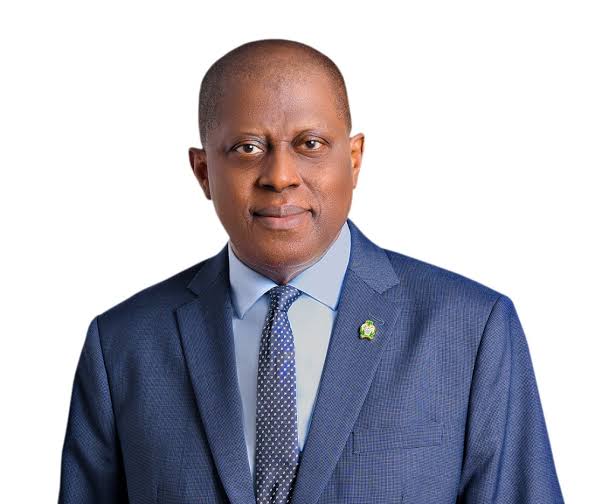
It is a welcome development that about 14 out of the 42 licensed banks in Nigeria have met the target given by the Central Bank of Nigeria (CBN) as deadline for meeting the required capital base for any bank operating in Nigeria. The demand which has now become a monetary policy directive has only six months to be fully implemented by the apex regulatory body, the CBN. The revelation by the Governor of the apex financial institution, Olayemi Cardoso, was a subtle reminder that less than 30% of the banks in operation in the country has not met the demand which was made about one year ago, signally a probability that no shift in time period would be entertained by the current monetary authority which has been saddled with restructurings in the industry in an effort to strengthen financial sector stability and ensure more depth in the various economic development contribution in the huge structural adjustment demands in the Nigerian economy.
Cardoso’s call may have been seen by many operators in the industry as coming too early or alarmist in nature, but indications are rife that the first major recapitalization call in the country between 2004 to 2006 was not implemented with the speed it deserved, prompting to a last minute rush which created loopholes that resulted in haphazard considerations and poor execution by the various authorities involved in the much needed investigations and approvals, the result which was a very serious systemic failure in the industry, only two years after the botched recapitalization. As a matter of fact, echoes of that consolidation effort are still reverberating today in the financial sector, the reason for which the current recapitalisation effort was called again after just 10 years, even as a huge population of the victims have not been settled as promised by the CBN and the Nigerian Deposit Insurance Corporation (NDIC).
The current recapitalisation has been welcomed by the Nigerian investment publics based on the increasing demands of financial intermediation in the economy which could only be addressed by the application of huge capital, competitive application and adequate skills hitherto not very available in the Nigerian economy. The complete absence of reasonable financial collaboration by banks in the country which is caused by poor capital base in banks is believed to have been largely responsible for the poor development of the country’s infrastructure base, a major source of systems failure including very low productivity and unemployment. The CBN believes that an improved capital base will offer the banks a wide operating opportunity, fairly robust level of competition, broad-based stability within the financial sector and strong relationship and collaboration with its peers across the globe. Today, Nigerian banks do not venture into syndications involving big ticket platforms because their entire capital base was quite insignificant and barely enough to grow the much needed interests of the Small and Medium institutions which most of the banks claim to service. At the end of the entire gamut, the situation now remains that the banks become mere deposit mobilizers and rent-seekers for institutions and governments, leaving the numerous failing infrastructure unaided.
Economic Intelligence reports from our stable are rife that the demands of the various levels of capital provision by banks would be affordable within the time frame as banks are still making frantic efforts to beat the March 2026 deadline but the banks are still embroiled in the various computations and considerations involving ownership and allocation. This is believed to have been the crux of the issue and not capital availability among the desired investors or shareholders. This becomes pertinent according to investors that almost all the banks in Nigeria that are the products of mergers and alliances during the lasts recapitalisation effort have either died or are now mere microfinance banks based on the alliance that threw up incongruous partners in the system, while the banks that are strong today are more of the ones that recapitalized using the instrumentality of the country’s erstwhile very strong capital market. Today, the Nigerian capital market remains very fluid and cannot generate the kind of support it earned fifteen years ago. Those times, between 2003 and 2006, roadshows and market attractions were so loud to the extent that issues targeted for massive investment were taken to the door-steps of investors who were made to believe in the recapitalisation project.
As a matter of fact, there is every reason to believe that the on-going recapitalisation programme will be a huge success because the market is waiting for big ticket players based on the expressions in the new market frontiers that could incubate larger businesses. The prime economic areas in the country are waiting for leverage and this would only become very positive when the banks come in as big players. The oil and gas sector are waiting to be harvested when banks can afford to play with huge capital in it, so also IT, Property, Manufacturing, hospitality, Health, Education, construction etc.
The level of stability in the financial sector now is huge because relevant policy regulations have come to play in such a way that the regulator have not compromised the odds that have been identified within the system. It is observed by many investors that the Nigerian money market is a very large place and has room for various creative activities that banks can offer huge support and come out with valuable returns. This recapitalisation, when concluded will leverage numerous new developments that create new incomes. The CBN is of the opinion that the banks can even be more profitable if it has capacity to handle the very large activities across various needs in the economy.
With a more definitive forex market environment, dependable stability and big customer base, the financial sector will grow in leaps and bounds and may willingly begin to introduce self-induced capitalisation in due-course, without being prompted to do so by the regulators. Looking at the biggest five banks, the mid-tier banks and the very young and more creative banks, it is obvious that the base must be a achieved within the time frame. What must be jealously guarded by the regulators is the configuration of any group that mulls Mergers and Acquisition as that remains the very weak link in baking sector consolidation, looking at hind-sight.
It is obvious that the enforcement of recapitalisation by Cardoso is not any vote of convenience to the sub-sector but a clarion call by the proactive Cardoso team to prepare the financial sector for an indomitable lead in a continent where banking environment is constantly positioning for the future because global financial practice has become a game of stability, numbers and coefficient. There is the feeling in the industry that banks must always possess capacity.
It is true that about 28 banks are tinkering their ways forward, but many believe that it is more of strategy than distress. Since almost all of them have surpassed the capital base for the last operating status, what may happen in the worse-case scenario is the downgrade from point A to B, and not any distress. What happens in the Cardoso calculation is that no bank will fail in this their current capitalisation. With this development, banks can choose where to ply their trade and remain stable. Those who want to play big are already inching towards the N200 million-N500 million level, and these are the geese that can lay the golden eggs for the economy. As a matter of fact, Nigeria need both huge and small banks provided they have a much defined and segmented role. This was the message Nigerians lost at the first instance: consolidation and recapitalisation do not come with the same demand.